AI agents are starting to act for you: set them up like a new member of staff
AI tools are moving from writing text to taking actions in your systems, and the ICO says autonomy is no excuse for poor compliance. Here's what that means for UK SMEs and how to set agents up safely.
AI tools are moving from writing text to taking actions: reading inboxes, updating records and working across your business systems. The UK's data protection regulator has made clear that an AI agent acting on its own doesn't move responsibility away from you. Before you switch one on, set it up like a new member of staff, with its own account, limited access, a record of what it does and a person signing off anything that matters.
What has changed with AI agents this month?
On 8 October, at its Gemini at Work event, Google announced Gemini agent. According to TechCrunch, it can plan and carry out tasks across business apps and systems, rather than simply answering questions.
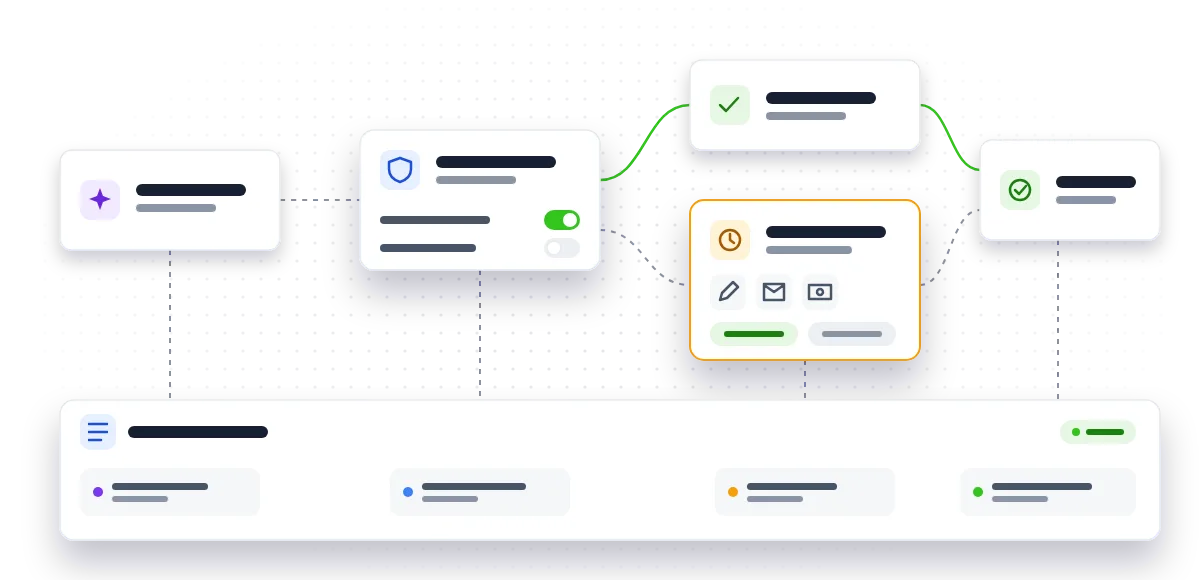
The detail is worth reading. 9to5Google reports that the agent can hand work to subagents, use more than one AI model, and gets its own workplace identity, complete with an email address. It works from different devices and channels, with the command line, Google Workspace, Slack and Microsoft 365 given as examples.
The launch is aimed at enterprise customers first, so check what's actually on your own plan before assuming you'll get it. But the direction is clear. AI is no longer just a writing assistant sitting beside your team. It's becoming something that logs in, opens records and does things.
What is the ICO asking, and why should a small business care?
On the same day, 8 October, the Information Commissioner's Office opened a call for evidence on agentic AI. It wants to know how organisations are managing the data protection risks of AI agents, and it closes on 20 November 2026.
It isn't only aimed at the big AI developers. The ICO is asking both the companies that build agents and the businesses that use them to respond. It covers six themes:
- data security
- transparency
- accountability
- automated decision-making
- fairness and purpose limitation
- lawful processing
One example the ICO gives is an agent that retrieves information from outside your business and updates an internal database on its own. That's a very ordinary task, and exactly the kind of thing a small firm might want to automate.
The ICO's tone is direct. Its Executive Director of Technology Regulation said that "the fact AI agents act with autonomy is not an excuse for poor compliance", according to the ICO's announcement. The ICO also says organisations must design transparency into agentic AI systems from the beginning. Freshfields' commentary on the call for evidence is a useful read if you want the legal view.
In plain terms: if an AI tool reads your emails, changes customer records or acts on personal data, you're still responsible for it under UK GDPR. This is the clearest sign yet of what the regulator will expect.
Where are UK small businesses with AI right now?
Mostly at the writing stage. The ONS bulletin of 8 October found that around three in ten UK businesses (30%) used at least one type of AI technology in September 2026. Among businesses with fewer than ten employees it was 29%, against around half of the largest firms.
For firms with ten or more staff, the most common uses were text generation using large language models (21%) and visual content creation (19%). That's drafting, summarising and making images. Useful, but low risk, because a person reads the output before anything happens.
Agents change that. The jump from "AI writes a draft" to "AI updates the database" is a big one, and it's the step where data protection, security and plain old mistakes start to matter. If you're among the firms only just starting with AI, that's no bad thing. You can set things up properly from day one.
How do you set up an AI agent like a new member of staff?
Think about how you'd onboard a new starter. You wouldn't hand them the admin password on day one. Treat an AI agent the same way.
- List what can already act. Write down every AI tool that can read or change your systems today, including add-ons and integrations inside Microsoft 365 or Google Workspace. Many firms find more than they expected.
- Give each agent its own account. No shared logins and no borrowing a person's account. If an agent has its own identity, as Google's does, name it clearly so its actions are easy to spot.
- Start with the least access it needs. Begin read-only. Add write access one system at a time, once you've seen how it behaves.
- Keep a log of every action. What it read, what it changed, when, and why. If you can't answer "what did the agent do last Tuesday?", you're not ready to widen its access.
- Put a person in the loop for anything that matters. Require human approval for changing records, sending external emails or moving money.
- Update your paperwork. Wherever an agent touches personal data, review your data protection impact assessment (DPIA) and your privacy notice.
- Use the ICO's six themes as a checklist. Even if you don't respond to the call for evidence, run each agent past them: is it secure, transparent, accountable, fair, limited to its purpose and lawful?
One more practical point: an agent that runs tasks on its own also runs up usage, so set spending limits alongside access limits.
If you want to connect AI tools such as Claude, ChatGPT or Copilot to your own systems, the safest route is a deliberate, limited connection rather than broad access. That's what MCP servers and AI integrations are for.
Is the payoff worth the effort?
There's a real prize, and the main blocker isn't the AI. On 19 October the Social Market Foundation published Byte-sized growth, estimating that wider AI adoption could add £38–47 billion to the revenues of small and medium-sized businesses in Great Britain. SMEs already using AI reported an average revenue uplift of around 2.8%. It's worth knowing that the survey was commissioned by Intuit, which sponsored the report.
The barriers it names are telling: disconnected tools, fragmented data and manual processes. In other words, the gains come from connecting AI to your data and your processes, and that's exactly where the risk sits too.
So tidy up first. If customer details live in three spreadsheets and an inbox, an agent will either struggle or confidently update the wrong one. Joining up your systems and agreeing which one holds the truth is unglamorous work, but it makes the AI both more useful and safer. Business process automation is often the right first step before any agent goes near your data.
What should you do next?
- This week: list every AI tool that can read or change your systems, and who set it up.
- Before 20 November: read the ICO's six themes and decide whether to respond to the call for evidence. At the very least, use them to check your own setup.
- Before any new agent goes live: give it its own account, start it read-only, switch on logging and agree which actions need a person's approval.
- Alongside all of this: pick one low-risk, high-annoyance task and fix the data behind it first.
If you'd like a second pair of eyes, our AI strategy and implementation work starts with exactly these questions, and an AI readiness review can tell you where your data and systems stand before you hand anything to an agent.
Thinking about letting AI act in your systems? Ask us for a short, plain-English AI plan that covers where it helps and how to set it up safely.
Talk to usQuestions people ask
Do small businesses have to respond to the ICO's agentic AI call for evidence?
No, it's voluntary. The ICO has asked both builders of AI agents and businesses that use them to respond, and it closes on 20 November 2026. Even if you don't respond, its six themes make a handy checklist for your own setup.
What's the difference between an AI assistant and an AI agent?
An assistant produces something for a person to check, such as a draft email or a summary. An agent takes actions itself, such as updating a database or working across your business apps, which is why access, logging and approvals matter much more.
Should an AI agent use a member of staff's login?
It's better not to. Give each agent its own account with its own permissions, so you can limit what it can touch and see exactly what it did, separately from what your people did.
Is it safe to connect ChatGPT, Claude or Copilot to our own systems?
It can be, if the connection is deliberate and limited. Start with read-only access to one system, log every request and require a person to approve anything that changes records, sends external emails or moves money.
Do we need to change our privacy notice if we use an AI agent?
If the agent processes personal data, review your privacy notice and your data protection impact assessment. The ICO says organisations must design transparency into agentic AI systems from the beginning.
Sources
- ICO: Agentic AI call for evidence (ico.org.uk)
- ICO secures changes from leading AI developers as scrutiny extends to AI agents (ico.org.uk)
- Freshfields: AI agents and UK data protection law (www.freshfields.com)
- TechCrunch: Google brings agentic AI to Gemini, starting with businesses (techcrunch.com)
- 9to5Google: Google Cloud announces Gemini agent (9to5google.com)
- ONS: Business insights and impact on the UK economy, 8 October 2026 (www.ons.gov.uk)
- Social Market Foundation: Wider AI adoption could add £43bn to small business revenues (www.smf.co.uk)